
Pick autoflowers when you want speed, a small footprint, and a low-maintenance cycle. Pick feminized photoperiod seeds when yield, potency, and training flexibility matter more than turnaround time. The trade-off is consistent across the research: faster and simpler on one side, bigger and more controllable on the other, so the right answer depends on your space, schedule, and goals. Whichever path you choose, sourcing verified genetics from a legal seed bank protects the outcome.
TL;DR:
- Autoflowers finish faster and require less space, making them ideal for quick turnarounds or limited environments, but they generate lower yields and THC levels compared to photoperiod plants.
- Growing autoflowers involves more frequent planting cycles, which increases labor costs and reduces profitability, especially in commercial-scale operations.
- Photoperiod feminized plants give growers control over flowering timing and tend to produce higher biomass and potency, but they need longer vegetative periods and more precise light management.
- Autoflowers are genetically prone to hermaphroditism due to their recessive Autoflower1 locus, and environmental stress can still cause feminized plants to develop male flowers, risking seed production.
- Selecting the appropriate seed type depends on specific goals, budget, space, and schedule, with autoflowers suited for speed and simplicity, and feminized seeds better for maximizing yield and potency.
Table of Contents
- How flowering gets triggered: age versus light cycle
- What yield and potency data say about the economics
- Training, lighting, and feeding: what changes by seed type
- The genetics behind autoflowering and the risk of hermaphrodites
- A decision checklist: which seed type fits your situation
- Why this comparison holds up: grounded in research and real catalogs
- A grower's honest take on the autoflower versus feminized debate
- Where to start if you're ready to grow
- Sources
- FAQ
How flowering gets triggered: age versus light cycle
Autoflowering cannabis and feminized photoperiod cannabis differ at the genetic level, and that difference drives almost every practical decision a grower makes. Autoflowers switch from vegetative growth to flowering based on age: once the plant reaches a certain maturity, it begins producing buds regardless of how much light it receives each day. Feminized photoperiod plants behave differently. They stay vegetative under long daily light exposure and only begin flowering when the light cycle shortens, typically to around 12 hours of darkness, which mimics the seasonal shift growers trigger indoors or that occurs naturally outdoors as summer turns to fall.
That mechanical difference shapes the entire grow calendar. Autoflowers move from seed to harvest in a tight, largely fixed window, since the plant's internal clock is running the show rather than your lighting schedule. Feminized photoperiod plants give you control over timing: you can hold them in vegetative growth for weeks or months, building a larger structure before flipping the light cycle to start flowering.
The practical implications show up in a few areas:
- Speed: autoflowers typically finish faster than photoperiod feminized plants, since there's no extended vegetative phase required.
- Scheduling: photoperiod growers decide when to flip to flowering, which allows precise harvest planning.
- Annual cycles: the shorter autoflower timeline allows more grow cycles per year in the same space.
- Outdoor planning: photoperiod plants depend on natural day length and typically finish once in a season, while autoflowers can be started and harvested multiple times outdoors if the climate allows.
This age-versus-light distinction also explains why autoflower genetics show up so often in guides aimed at growers who want a quick, low-maintenance cycle, while feminized photoperiod seeds dominate conversations about maximizing a single, carefully timed harvest.
What yield and potency data say about the economics
A 2026 farm-level greenhouse evaluation gives one of the clearest pictures yet of how these two seed types compare once you account for real production costs. The study found that autoflower cultivation produced less total biomass and lower THC content than photoperiod cultivation, and under the study's cost assumptions, autoflower production generated a negative annual return per square foot while photoperiod production stayed profitable on the same basis.
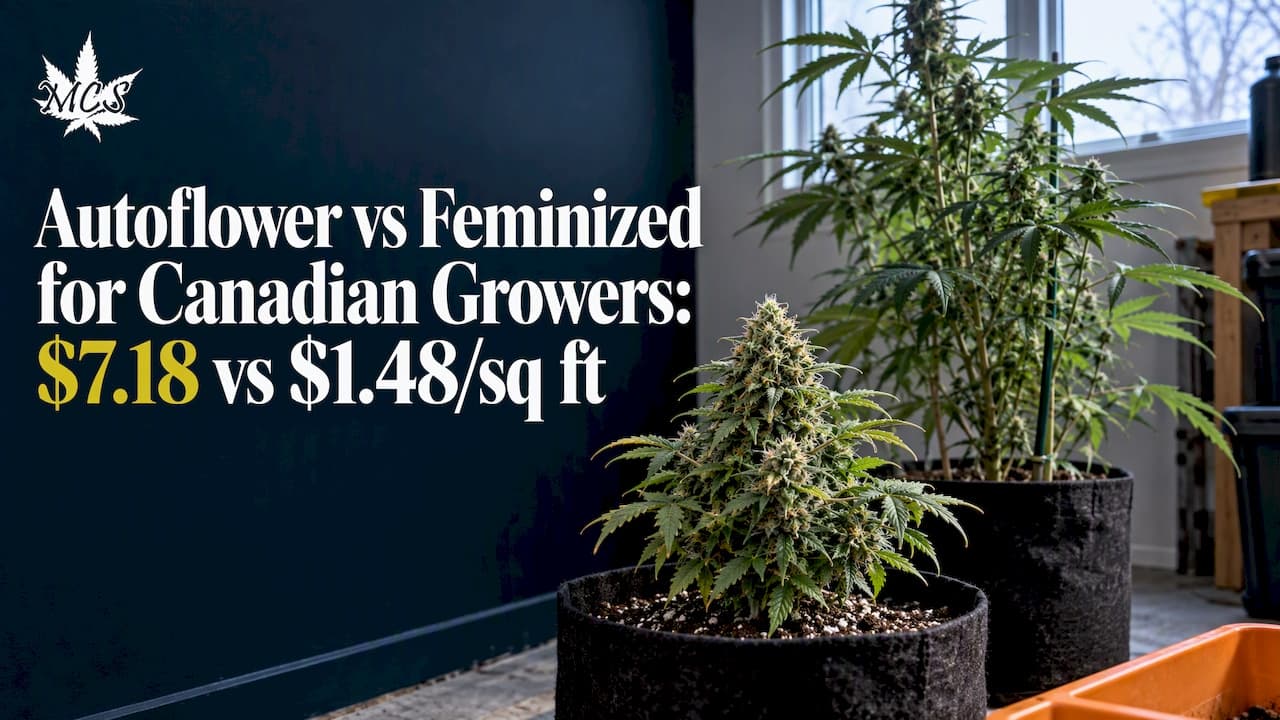
Labor made up 52% of autoflower production costs compared with 34% for photoperiod cultivation in the same greenhouse study, and the study calculated returns above total costs at negative $1.48 per square foot for autoflower versus positive $7.18 per square foot for photoperiod plants. That gap reflects how often autoflower crops need to be replanted and restarted to match the output of fewer, longer photoperiod cycles.
A few cost drivers explain the pattern:
- Cycle frequency: autoflowers need more plantings per year to produce comparable annual yield, which multiplies labor touchpoints.
- Labor share: transplanting, training, and harvest tasks recur more often with short-cycle autoflowers.
- Light infrastructure: photoperiod growing can require blackout or light-deprivation systems outdoors, an upfront cost autoflowers avoid.
- Per-cycle yield: photoperiod plants, given a longer vegetative runway, tend to build more bud sites before flowering begins.
None of this means autoflowers are a poor choice. Growers with limited capital, limited space, or a need for fast turnover often find autoflowers practical precisely because they skip the light-deprivation infrastructure photoperiod growing can demand. Before scaling either approach, run your own numbers: estimate local seed and input prices, your available labor hours per cycle, and realistic yield per square foot, then compare projected returns the same way the greenhouse study did.
Training, lighting, and feeding: what changes by seed type
Growing autoflowers and feminized photoperiod plants well means adjusting your technique, not just your expectations. Autoflowers have a fixed, compressed life cycle, so aggressive training methods that photoperiod growers rely on, like topping or heavy low-stress training, can cost an autoflower plant recovery time it doesn't have. A stressed autoflower may finish flowering before it bounces back, locking in a smaller yield. Gentle low-stress training applied early, along with pots sized to avoid transplant shock, tend to work better for autoflower genetics.

Photoperiod feminized plants give you more room to experiment, since you control when flowering starts. A meta-analysis of photoperiod duration found that vegetative light-cycle length affects floral biomass and cannabinoid concentration differently, with longer vegetative exposure increasing cannabinoid concentration up to a favorable window and shorter vegetative time favoring biomass. In other words, when you flip the lights isn't just a scheduling choice, it's a lever for the outcome you want.
A practical sequence for either seed type:
- Choose pot size early and avoid repotting autoflowers more than once, since root disturbance costs recovery time they can't make up.
- Apply training gently on autoflowers and save aggressive topping or heavy LST for photoperiod plants with a longer runway.
- Time the veg-to-flower switch on photoperiod plants based on whether you're prioritizing biomass or cannabinoid concentration.
- Keep feeding schedules stable, since nutrient swings are a known stress trigger that can affect flowering quality.
- Monitor for early stress signs like leaf discoloration, which often point to deficiencies worth correcting before they compound.
Pro Tip: Keep a simple grow log noting training dates and any stress events, since comparing that log against your harvest weight is the fastest way to learn what your specific setup tolerates.
Stable conditions matter for another reason beyond yield: they reduce the odds of a plant switching sex under stress, which the next section covers in detail. For Canada-relevant technique notes, the autoflower growing guide covers seasonal timing in more depth.
The genetics behind autoflowering and the risk of hermaphrodites
Autoflowering traces back to a single, well-documented genetic switch. Research mapping the Autoflower1 locus found that it behaves as a recessive trait, meaning a plant needs two copies of the autoflower gene version to reliably flower by age rather than light cycle. When breeders cross heterozygous parents, the offspring segregate, producing a mix of true autoflowers, intermediate plants, and photoperiod-sensitive individuals in the same seed batch. That's part of why some autoflower seed lots perform inconsistently: the underlying genetics weren't fully stabilized before the seeds went to market.
Feminized seeds solve a different problem. They're bred to minimize the chance of male plants, which matters because pollinated female flowers produce the resin-rich buds growers want. But feminized doesn't mean hermaphrodite-proof. Environmental stress, including light leaks during dark periods, sudden heat spikes, or erratic nutrient levels, can still trigger a feminized plant to develop male flowers, a response plants use to self-pollinate when conditions threaten survival.
The downstream consequences of pollination are worth understanding before it happens:
- Seed formation: pollinated flowers redirect energy into seed production instead of resin and cannabinoid development.
- Reduced bud quality: seeded buds are denser with seeds and lighter on usable flower, lowering the harvest's practical value.
- Genetic spread risk: pollen from a hermaphrodite plant, whether autoflower or feminized, can pollinate neighboring plants and affect an entire grow room's yield.
- Unstable offspring: seeds collected from a hermaphrodite event can carry that same predisposition into future generations.
Catching early signs, like small banana-shaped structures near the pistils, and correcting the environmental stressor immediately gives you the best chance of limiting the damage. More on how autoflower genetics express in practice is covered in this explainer on autoflower traits.
A decision checklist: which seed type fits your situation
Matching seed type to your actual constraints, rather than to hype around either category, tends to produce the best outcome. Run through these factors before choosing:
- Time to harvest: if you need a fast turnaround, autoflowers typically finish sooner than photoperiod feminized plants.
- Available space: small tents or limited square footage favor autoflowers, since their compact size and shorter cycle suit tighter setups.
- Experience level: beginners often appreciate the lower complexity of autoflower schedules, though photoperiod plants aren't technically harder, just more involved.
- Yield priorities: if maximizing total harvest weight and cannabinoid concentration matters most, photoperiod feminized genetics give you the tools to get there.
- Climate and season: outdoor growers in short-season regions sometimes fit multiple autoflower cycles into a single summer, while photoperiod plants typically finish once per outdoor season.
- Budget for labor: photoperiod cultivation can justify more labor per cycle through higher yield, while autoflowers need more frequent, smaller labor investments.
Here's how that checklist tends to play out by grower profile. A beginner with a small tent and limited time usually does best starting with autoflowers, since the compressed schedule forgives a learning curve faster. A seasonal outdoor grower working with a short summer window can often run two or more autoflower cycles instead of committing a full season to one photoperiod harvest. A craft grower focused on quality and potency control generally leans toward feminized photoperiod genetics, since the longer vegetative window allows more precise training and light-cycle timing. A commercial operator weighing square-foot returns should run the numbers from the greenhouse economics discussed earlier before committing either way.
Watch for red flags regardless of which path you choose: seed sources with no verified genetics, vague breeding claims, or yield promises that sound disconnected from what the research on biomass and potency actually shows.
Why this comparison holds up: grounded in research and real catalogs
This comparison draws on peer-reviewed genetic mapping, a 2026 farm-level economic study, and Health Canada's own guidance on legal seed sourcing, which stresses buying from legal sources and notes that no pesticides are specifically registered for home cannabis cultivation. One reputable seed bank operates from that same grounding: a curated catalog organized by seed type, a germination guarantee on purchases, and support staff familiar with the climate challenges Canadian growers face.
Two common runs illustrate the split covered above:
- A quick autoflower micro-run in a small tent, chosen for turnaround speed and minimal training, suits growers testing a new space or schedule.
- A photoperiod training run with a longer vegetative phase and deliberate light-cycle timing suits growers chasing maximum yield or a specific cannabinoid profile.
Further reading on genetics and use-cases is available through MCS's autoflower resources and the explainer on autoflower traits.
A grower's honest take on the autoflower versus feminized debate
Autoflowers earn their place for speed and simplicity, not because they outperform photoperiod genetics on yield or potency, and pretending otherwise sets growers up for disappointment. The smarter move is running a small batch of each side by side in your own space, tracking time to harvest and final weight, since local conditions shift these numbers more than any chart can predict.
— Dino Grow Master
Where to start if you're ready to grow
A seed bank curates its catalog by seed type, backs every purchase with a germination guarantee, and ships discreetly, so whichever path this comparison points you toward is a few clicks from your door.

Browse the autoflower seed collection for fast, compact genetics, or explore the full seed catalog to compare feminized and autoflower options side by side.
Sources
- High-THC Cannabis sativa in a New York greenhouse: yield and economic factors | Journal of Cannabis Research
- Identification and mapping of major-effect flowering time loci Autoflower1 and Early1 in Cannabis sativa L.
- Meta-analysis on photoperiod duration effects on cannabis biomass and cannabinoid yield
FAQ
Which is better, autoflower or feminized?
Neither is universally better: autoflowers suit growers who want speed, small spaces, and low-maintenance cycles, while feminized photoperiod seeds suit growers prioritizing yield and potency. A 2026 greenhouse study found photoperiod plants produced more biomass, higher THC, and better returns per square foot under the study's conditions.
Can autoflowers turn male?
Yes, non-feminized autoflower seeds can produce male plants, since autoflowering refers only to the flowering trigger, not the plant's sex. Choosing feminized autoflower seeds reduces that risk, though environmental stress can still cause any plant to develop male flowers, as research on sex plasticity explains.
What happens if you pollinate an autoflower?
Pollination redirects the plant's energy from resin and cannabinoid production into seed formation, which reduces usable bud quality. It can also spread pollen to nearby plants, affecting yield across an entire grow space, and seeds collected from that event may carry unstable genetics into future generations.
What is the downside to feminized seeds?
Feminized seeds reduce the chance of male plants but don't eliminate hermaphrodite risk, since stress from light leaks, heat, or nutrient swings can still trigger male flowers on a feminized plant. They also require more vegetative and flowering time than autoflowers, demanding more light control and scheduling attention from the grower.